


A mines predictor promises access to information that doesn’t exist outside the game’s server. The mine positions for each round are generated through a cryptographic algorithm before the first click, locked behind a hashed seed that nobody — not the player, not a bot, not a browser extension — can read until the round ends. Predicting the result requires breaking that encryption in real time. No Telegram bot is doing that.
What Is a Mines Predictor?
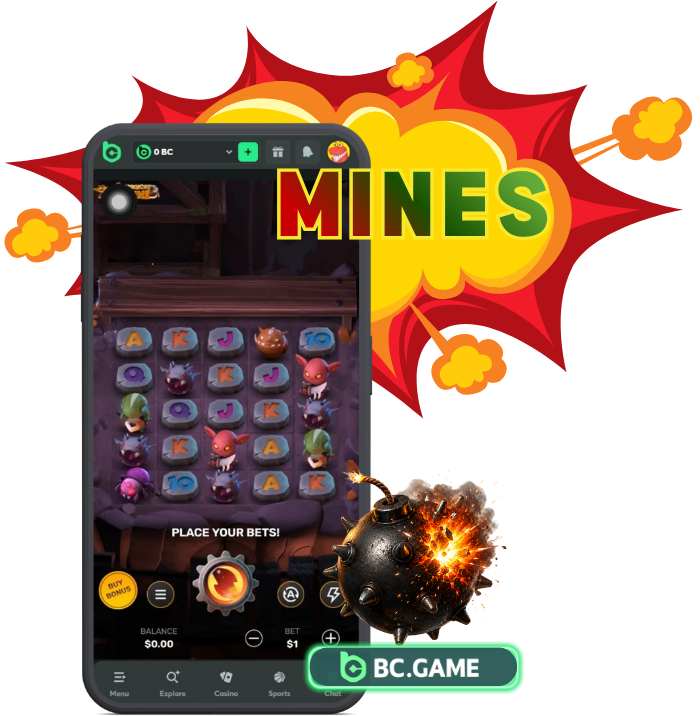
A mines predictor is any tool, site, bot, or script that claims to tell the player where the mines are hidden before or during a round. The format varies. The promise is always the same: know in advance which cells are safe, click only those, and win every time.
Some show up as Telegram channels. A bot posts a grid image with green and red markers before each round. “Click cells 3, 7, 12, 19. Avoid the rest.” The player follows the instruction, opens those cells, and either wins or loses. When it works, the channel gets a screenshot and a testimonial. When it doesn’t, the loss gets blamed on timing or server lag.
Others come as browser extensions or scripts. Install the extension. Open Mines on a casino platform. The extension overlays coloured markers on the grid. Green for safe. Red for mine. The player clicks the green cells. The extension charges a subscription fee or takes a cut of winnings through an affiliate link.
A mines predictor apk takes the concept to a standalone app. Download the file. Open it alongside the casino platform. The app displays a predicted grid layout for each round. Some of these APKs ask for login credentials to the casino account. Others request screen-sharing permissions. A few install background processes that the user never agreed to.
The mines predictor ai variant wraps the same empty promise in newer language. “Our artificial intelligence analyses thousands of rounds to detect patterns.” The pitch sounds more sophisticated than a Telegram signal. The result is identical. The AI cannot access the server seed. It cannot read encrypted data. It cannot predict cryptographically generated random outcomes. The label changes. The impossibility doesn’t.
How Mines Game Actually Works
Understanding why predictors fail requires understanding how the game generates its results.
Mines from Spribe uses a provably fair system. Before each round starts, the server generates the complete mine layout — every mine position on the 5×5 grid is decided before the player clicks anything. The server creates a seed, hashes it using a cryptographic algorithm (typically HMAC_SHA256), and shows the player only the hash. The hash is a one-way function. Seeing it reveals nothing about the underlying data.
The player (or the player’s browser) contributes a client seed. The server combines the server seed, the client seed, and a nonce (round number) to produce the final mine placement. This combination happens once, before the round begins, and cannot be altered mid-round.
After the round ends, the server reveals the original seed. The player can take the server seed, client seed, and nonce, run them through the same algorithm, and verify that the mine positions match what was played. Independent verification tools exist for this purpose.
Each round is cryptographically independent. Round 47 has no relationship to round 46. A streak of mines in the top-left corner across five rounds does not mean round six will place mines elsewhere. The algorithm doesn’t remember previous outputs. It generates fresh positions every time using a new combination of seeds and nonce.
This architecture makes prediction impossible without access to the server seed before the round starts. The hash is public. The seed behind it is not. Breaking the hash in real time would require breaking SHA256, which no consumer hardware — and no Telegram bot — can do.
Why Mines Predictors Don’t Work
- The results are cryptographically random. The mine placement algorithm uses the same class of cryptographic functions that secure banking transactions and encrypted messaging. If someone could predict the output of these functions without the key, the entire internet’s security infrastructure would collapse. Mines predictors claim to do casually what the world’s best cryptographers cannot.
- No external tool has access to the server seed. The seed lives on Spribe’s server. It’s never transmitted to the player’s browser in its unencrypted form before the round ends. A browser extension can see what’s on the screen. It cannot see what’s on the server. A Telegram bot has even less access — it’s running on a completely separate system with zero connection to the game’s backend.
- Each round is independent. Pattern detection — the idea that “mines tend to cluster in certain areas” or “after three rounds with mines on the left, the next round puts them on the right” — assumes that rounds are connected. They are not. The cryptographic generation process treats each round as a standalone event. Historical data from previous rounds has exactly zero predictive value for the next one.
- A mines hack predictor that claims to have cracked the system is claiming, in effect, to have broken modern cryptography. That’s not a gambling tool. That would be the most significant cybersecurity event in decades. It hasn’t happened.
- Three reasons. Each one is sufficient on its own. Together they make the case airtight.
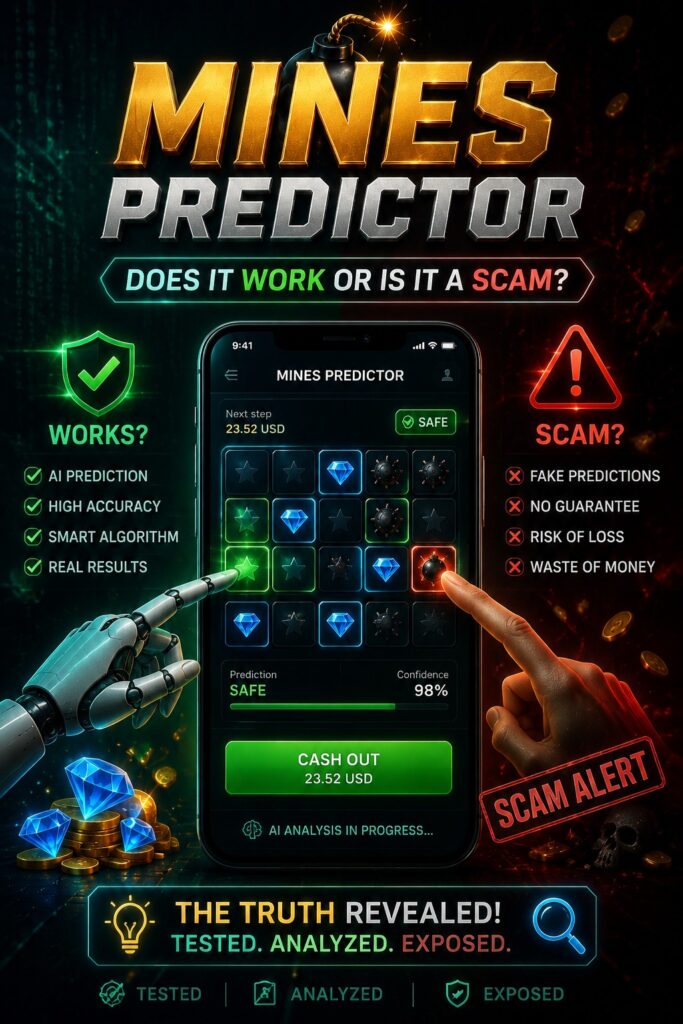
Common Types of Mines Predictors
The packaging differs. The emptiness inside is consistent.
- Telegram bots. The most common format. A channel posts “signals” — grid images showing which cells to click. Free channels attract users, then upsell to a “premium” version with “more accurate” predictions. The premium version costs money. The accuracy is identical to random guessing, because that’s what it is.
- Signal websites. A page with a grid that updates every few seconds. “Next round prediction: cells 2, 5, 8, 14, 20 are safe.” The site collects traffic. Runs ads. Sometimes asks for a casino account login “to sync predictions with your session.” That login request is the real product — the site is harvesting credentials.
- Browser extensions and scripts. Install an extension that overlays coloured markers on the Mines grid inside the casino platform. The markers are generated randomly or based on simple patterns that have no connection to the actual mine placement. Some extensions inject tracking code. Others modify page elements in ways that could trigger the casino’s fraud detection and get the account banned.
- Mines predictor apk mod files. APKs that claim to be modified versions of the casino app with prediction capabilities built in. The “mod” may include the base casino app with added malware. Keyloggers. Clipboard monitors that watch for copied wallet addresses. Screen recording. The prediction feature either doesn’t exist at all or runs a random number generator with a confident-looking interface.
- Paid courses and strategy groups. Not tools, but communities that sell access to “prediction methods” or “winning systems.” The system is usually a betting progression — double after a loss, reduce after a win — dressed up with screenshots of winning sessions. The math behind these systems doesn’t overcome the house edge. The course fee is a guaranteed loss before a single round is played.
Are Mines Predictors Safe?
The predictors themselves are often more dangerous than the game they claim to beat.
Financial loss from the tool itself. Paid Telegram channels, subscription extensions, premium signal services — all cost money upfront. That money is gone regardless of whether the predictions work (they don’t).
- Credential theft. Any predictor that asks for a casino login is collecting credentials. The casino account, the email associated with it, and potentially the password reused on other services — all compromised.
- Malware from APK files. A mines predictor apk downloaded from an unverified source can carry anything. Keyloggers that capture every password typed on the device. Clipboard hijackers that swap cryptocurrency wallet addresses during copy-paste. Background processes that persist after the app is uninstalled.
- Account bans. Casino platforms monitor for third-party tools interacting with their interface. Browser extensions that overlay elements on the game page or inject scripts can trigger automated detection. The consequence is account suspension or permanent ban, sometimes with balances frozen.
- Data harvesting. Free signal sites and Telegram bots collect user data — IP addresses, device information, usage patterns, sometimes chat messages. That data has value on secondary markets. The user pays with their information even when the tool is “free.”
Why People Believe in Predictors
The belief isn’t irrational. It’s human. A few psychological patterns explain most of it.
The desire for control. Mines is a game of pure chance dressed in a decision-making interface. The player clicks cells. The player chooses when to cash out. It feels like skill is involved. Predictors amplify that feeling by suggesting the player can gain even more control — knowing where the mines are turns a gamble into a sure thing. The appeal is obvious even when the logic is broken.
Pattern recognition in random data. Humans see patterns everywhere. Three rounds in a row with mines in the corners and the brain says “mines tend to go in corners.” The cryptographic generator has no concept of corners. It produces positions through mathematical operations on seeds and nonces. But the brain isn’t built to process that. It’s built to find patterns, even when none exist.
Survivorship bias. The Telegram channel posts ten predictions. Three happen to match the actual mine layout by chance. Those three get screenshotted and shared. The seven failures disappear. New users see the successes and assume the tool works. The failures are invisible.
The “almost right” effect. A prediction says cells 3, 7, and 12 are safe. The player opens them. All safe. Then opens cell 16, which wasn’t in the prediction, and hits a mine. The conclusion: “The predictor was right about the first three! If I’d only followed it exactly, I would have won.” The predictor wasn’t right about anything. It made random guesses. Some happened to match. That’s statistics, not prediction.
Real Strategies vs Fake Predictors
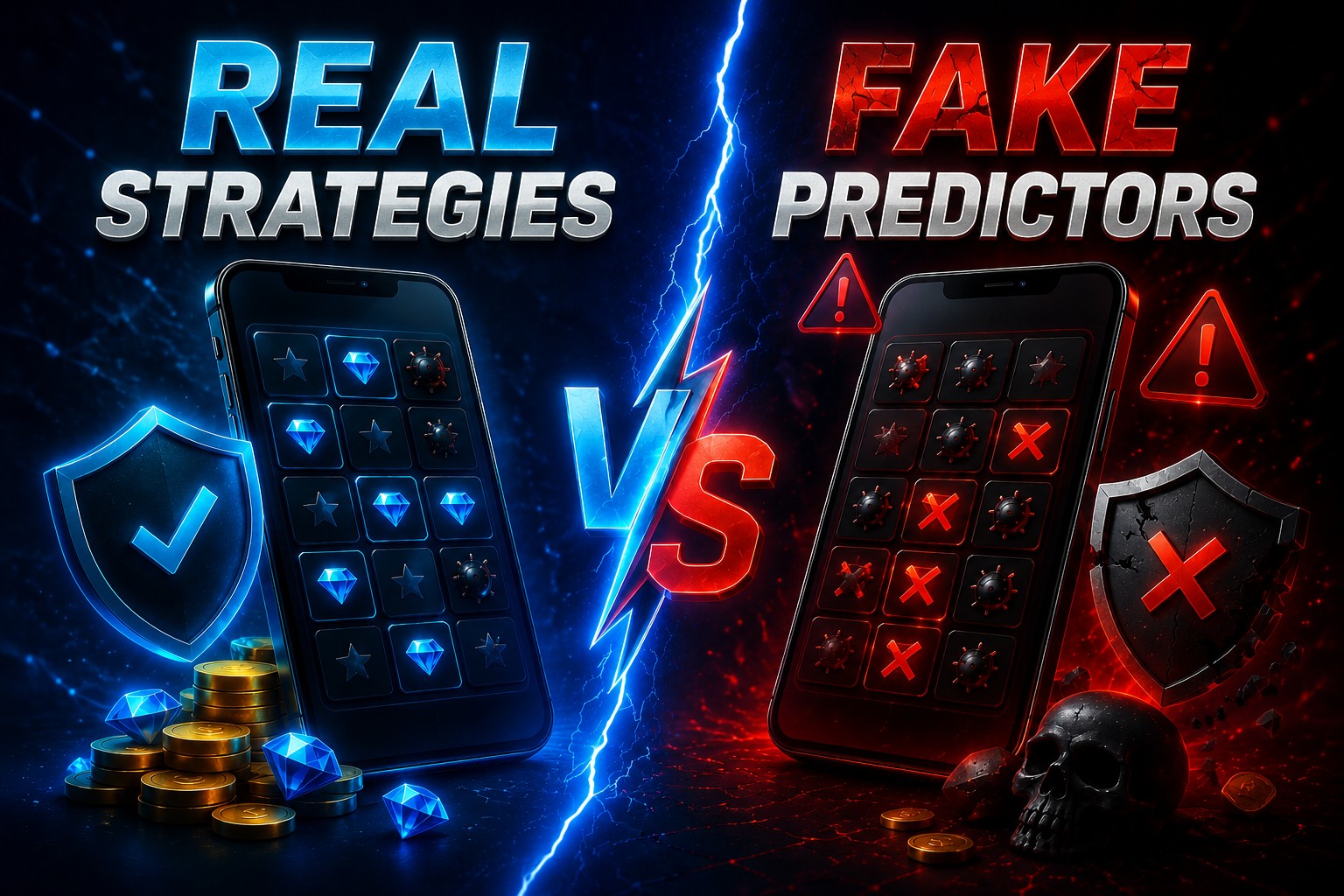
Legitimate approaches to Mines exist. They don’t eliminate the house edge. They shape how the variance distributes.
| Aspect | Real Strategy | Fake Predictor |
| What it does | Manages risk and cashout timing | Claims to know mine positions |
| Based on | Probability math, bankroll management | Nothing verifiable |
| Removes house edge | No | Claims to, but doesn’t |
| Cost | Free (just decisions) | Often paid (subscriptions, APKs) |
| Risk to account | None | Can trigger bans |
| Risk to device | None | Malware, keyloggers |
| Improves long-term results | Marginally, through variance control | Not at all |
| Requires trust in third party | No | Yes, with no accountability |
A real strategy looks like this: pick a mine count that matches the session bankroll. Set a cashout point before the round starts. Stick to it. Don’t chase losses. Don’t increase bets after losing rounds. Accept the house edge as a fixed cost of playing. Demo mode exists for testing these decisions without financial risk.
A fake predictor looks like this: install a tool, follow signals, send money when the tool asks for a subscription, lose the same amount (or more) as playing without it, plus whatever data the tool harvested along the way.
How to Play Mines Safely
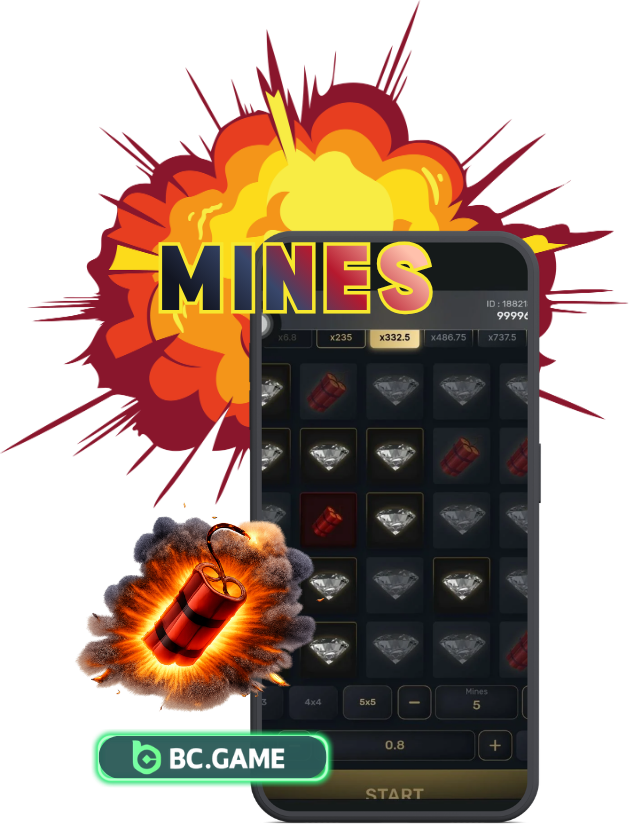
Safety in Mines comes from understanding what the game is and what it isn’t.
- Verify the platform. Licensed operator. HTTPS. Published terms. Responsible gambling tools. Provably fair verification available after each round. These are the basics that separate a legitimate platform from one that shouldn’t be trusted with a deposit.
- Don’t use third-party prediction tools. Not the Telegram bots. Not the browser extensions. Not the APK mods. Not the AI signal services. None of them can access the information they claim to predict. All of them introduce risks that don’t exist in the base game.
- Play with money that can be lost entirely. The house edge is real. Over enough rounds, the platform keeps its percentage. Every session should start with an amount the player has already written off as entertainment spending. Not rent. Not savings. Not borrowed funds.
- Use demo mode for testing. Any approach to mine count and cashout timing can be tested in demo at zero cost. Virtual credits absorb the variance. The observations carry over to real play without the financial learning curve.
- Set limits before the session starts. A spending limit and a time limit. Decided in advance, when the multiplier isn’t climbing on screen and the adrenaline isn’t flowing. Built-in platform tools — deposit caps, loss limits, session timers — automate what willpower alone can’t reliably maintain.
Can You Predict Mines Results?
No. The mine positions are generated through a cryptographic algorithm using server and client seeds combined with a nonce. The output is effectively random. No tool, bot, extension, or AI system operating outside the game server can access the data needed to predict the result before a round starts. Anyone claiming otherwise is either misinformed or deliberately misleading.
The provably fair system exists precisely to make this verifiable. After every round, the player can confirm that the mine positions were fixed before the first click. The same system that proves the game is fair also proves that external prediction is impossible. The two guarantees are the same guarantee.